After almost 4 years total, I finally have an appeal hearing date in October! It’s been a long, painful journey to get here. So many doctors, tests, medicines, side effects, failures, doubts, fear, depression, anxiety, panic, and anger. Anger at having to prove my pain as real and not contrived. Having to validate to others that I AM as sick as I say I am. Hearing strangers tell me I should be working. Others are worse off than I. I’m taking advantage of benefits I don’t deserve. I’m lazy. I’m faking. I just want to sit at home and watch television. Even worse than strangers stating these opinions are those I once considered friends. People who worked alongside me when I had a bucket by my desk from the nausea. Co-workers and bosses saying I looked fine, why was I doing this? Close “friends” who got tired of me cancelling on them. Telling me to “get over it!” The hurt this caused will never be forgotten. Trust was lost. I became hard, distant, keeping to myself. I was always so social. I loved being around others and didn’t really enjoy being by myself. Now it was me, myself, and I. I couldn’t count on anyone else to be there for me in my time of need. Whereas, I was always there for them. I cried for their losses, cheered for their wins, lent an ear to listen or a shoulder to cry on. But when I needed the support, they were gone. I don’t know if I’ll ever be the same with people. I’m distrustful, cautious, careful, where I used to be so open and welcoming. I don’t tell new people much about myself now. I smile and act happy. I downplay what they may have heard. I’m not me anymore. I don’t know if I’ll ever be again. That hurts. A lot. 
Uncategorized
Migraine Facts and Stats
MY CHRONIC PAIN IS NOT A CRIME
This letter was not written by me. I fully agree with the authors’ views on chronic pain management. We sufferers are being left with very few options if nothing changes. Thanks Mr. Unger for writing about how we all feel. The embarrassment and shame of being treated like a criminal is unfair, but widespread in our world. 
By Donald N.S. Unger
FEBRUARY 03, 2015
I WILL BE in chronic physical pain until I die. I’m 53, and this has been true for more than half of my life. I accept it.
Pain medication is inadequate. But with it I am more consistently functional and can minimize being housebound, bedridden, or hospitalized. I can be a responsible homeowner, spouse, parent; I can work as a teacher, a writer, an editor.
I recognize that drug abuse and addiction are serious problems. But ever-tighter regulations, at both the local and national levels, are of dubious value in reducing them — while causing grave harm to those of us in chronic pain, to the overwhelming majority who take medication for appropriate reasons, with effective oversight.
We don’t talk about this much — “They’re-making-it-harder-for-me-to-get-my-drugs’’ isn’t exactly a winning public flag to fly.
I’ve never been arrested, found to be out-of-compliance, had a substance-related accident or hospitalization, but increasingly I am a suspect, treated less as a patient and more as a criminal.
I’ve been subject to drug testing — random-but-regular, bitterness rising — for longer than I can remember. I recognize valid public health concerns associated with taking pain medication: doctor shopping; mixing prescribed drugs, or street drugs, from a variety of sources; people who scam physicians into providing legal prescriptions, then sell the meds on the street. Initially, I didn’t think I would care.
But I do care. The feelings of humiliation and degradation don’t fade; they simmer.
Increasingly I am a suspect, treated less as a patient and more as a criminal. The feelings of humiliation and degradation don’t fade; they simmer.
My latest pain contract, presented as a requirement for obtaining care, included a demand that I appear, whenever ordered, before any practitioner in the health maintenance organization to which I belong, within an hour’s time, with my medication bottle in hand.
For a pill count.
How, exactly, is that supposed to work?
I have a job, a family, a life. I can’t carry around a bottle of prescription narcotics; the contract deems loss, theft, or damage as suspicious activity, and the pills would not be replaced. So I would have to interrupt teaching, go home, retrieve the pills, and report to a practitioner.
Within an hour.
I would rarely be able to do this, and when I could, doing so within an hour would usually be impossible. But in failing to comply, I would risk the revocation of my “pain medication license.”
Again, abuse of prescription pain medication is a serious problem; people are dying. But a vastly larger group of us are living — in unremitting pain, in the face of which we do the best we can to remain productive and independent, to benefit, rather than burden, our families and society at large. Most of us have accepted ever-more-onerous restrictions, no matter how humiliating — urination on command, guilty-until-proven-innocent — regardless of how they clash with American values and medical ethics.
Do we have a choice?
Well, sadly . . . yes. Street narcotics. They are broadly available, and they’re less expensive. There’s no oversight, and no humiliating urinalysis.
But is this the direction we want to go?
Room To Breathe
Finally! After almost 3 years of paperwork, phone calls, information gathering, collecting records, frustration, anger, and crying, I have a hearing date for SSDI! Since 2011, I’ve been denied twice. I hired a lawyer who appealed my case on September 14th, and, and several weeks ago, I was informed by my attorney that SSDI was currently reviewing my file to see if I qualified as a “Dire Need” or “Special Circumstances” case. I apparently did, because I have a hearing on October 15th! Finally! The relief of just having a confirmed date is overwhelming. Yes I’m scared. Yes I’m concerned. Yes I’m nervous. But I can do this! I have suffered, in agony, without any assistance from state or government for almost 4 years. I have bankrupted myself and my mother is on the verge. I deserve this dammit! I’ve fought so hard and for so long! I deserve some help! Some relief (at least financially), some compassion and empathy (hopefully) from the judge. I hate that it is on me to prove how sick I really am. To prove that I’m not faking any of this, but really, who would want to live like this?! I know that winning my case and getting my benefits won’t ease the pain, but it will certainly ease my mind, which will be a huge load off of me. Please think of me on October 15th! I’m not just fighting for myself, but for everyone suffering from invisible illnesses. Better days ahead! #AlwaysKeepFighting 
My Safety Bubble
The longer the chronic pain wracks my body, the more depressed I get. That’s normal. I get it. 24/7 with no respite. Enough to drive anyone insane. I cry uncontrollably. I avoid sunlight and weather conditions that make migraines worse. I try to get to my scheduled appointments with my doctors and psychologist. I need to drive myself, so I can’t take my meds before I go. I get behind on the meds and the pain gets ahead of me. Then it’s days playing catch up. Usually in bed, in the dark, quiet, peace of my house. I don’t know each day what I’ll be able to do until I wake up. I don’t sleep much. Painsomnia. So between the pain, exhaustion, stress, anxiety, and depression, it’s easier to stay home. I’m safe here. here I can control pretty much everything around me. It’s the only environment I can control. That makes it so important and precious to me.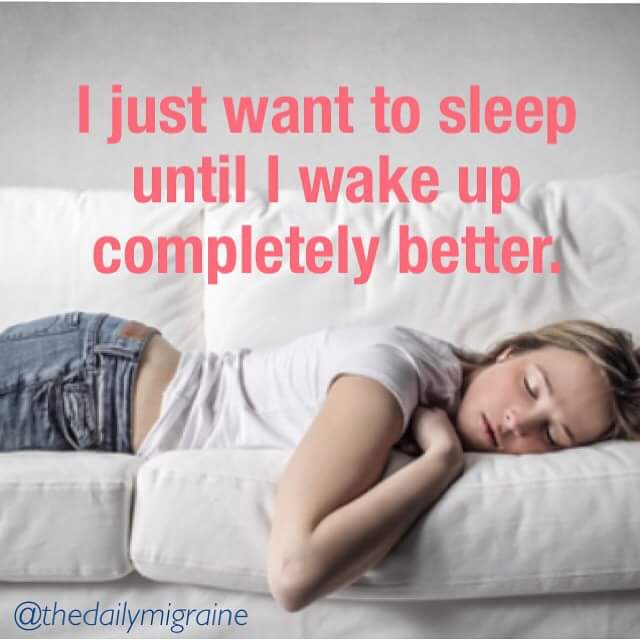
2 Sufferers, 1Like Mind
Internalizing the Stigma of Migraine
By Kerrie Smyres—July 12, 2013
Every time I have a migraine, there’s a voice in my head that questions whether I’m just being lazy. Even after after five years of practicing listening to my body, extensive therapy, and lots of meditation and self-reflection, I catch myself questioning the legitimacy of my migraine symptoms. Not so much the pain — that’s pretty hard to deny — but the fatigue, brain fog, and general malaise.
I did it again today. After two days of traveling to get to Seattle, where I’m housesitting to escape Phoenix’s monsoon season, I woke to an overcast day. Exactly the kind of day that triggers migraines and prevents me from living in Seattle. I was clearly in a migraine, though the preventives I’m on kept the pain at a level 4. I can physically function at that level, but thinking is tough. Unfortunately, thinking was my primary goal for the day and I was agitated that I couldn’t focus or construct coherent sentences. And I wondered if I was just being lazy, especially because they pain isn’t that bad.
Though quieter than it was five years ago, that voice nagged at me for hours: “You should be doing more. You’re choosing to read over working. You’re not that sick. Just take out the computer. The migraine’s not that bad. You’re being lazy. You haven’t written in a week. You need to be productive.” Then the clouds cleared out and I began to feel a bit better. The first thing I wanted to do? Write. I was not procrastinating or lazy this morning, I was sick. Why is it so hard for me to grasp that obvious, fundamental truth?
The stigma of migraine and society’s belief about illness in general and migraine in particular have occupied my mind a lot lately. I have to wonder if I and so many other migraineurs berate ourselves not only because other people regularly distrust that migraine is a true physical illness, but because we have internalized those same doubts.
This is where the stigma of migraine is especially damaging. Dealing with people who don’t understand — and don’t seem to want to understand — what we’re going through is frustrating and infuriating. Believing it ourselves is way more harmful because it demoralizes us and causes us to question the legitimacy of our own experience. Instead of treating ourselves with compassion, as we would a loved one who was sick, we criticize ourselves for being lazy or unproductive. We push through our pain and other symptoms instead of nurturing ourselves. We dismiss our struggles as not that important. All of this reinforces the message to ourselves (and others) that migraine is not a serious, life-altering illness.
Worst of all, these beliefs fill us with guilt and self-doubt. Even when we “know better,” when we accept as fact that migraine is real and our symptoms are debilitating, we don’t always embrace these beliefs emotionally. My therapist would say it is the difference between knowing something intellectually and knowing it in our hearts. I’ve had the intellectual part down for a while, the emotional aspect still eludes me.
No matter how much I write about the needs of migraineurs and work to reduce its stigma, that very stigma has insinuated itself into my self-perception. It will continue to haunt me whenever I have a migraine until I accept in both my mind and heart that I am not deficient or lazy, but have an illness that is in no way a reflection of my personality, desires, or attitude. That’s a tall order. It’s also my greatest wish for all migraineurs — that we all find a place of internal peace where we can separate who we are from this illness and accept that having a neurological disorder doesn’t make us wrong or bad or broken.
Side note: Kerrie Smyres, I hope you don’t mind me publishing this article on my blog. It speaks to me so much. I have said these same things repeatedly. Your writing is spot on! Stay strong, Judi #AlwaysKeepFighting
Loss Of Cognitive Function
Treating “migraine brain”
By Tammy Rome—August 1, 2014
Anyone who has ever experienced a migraine will tell you that it is nearly impossible to think clearly or communicate effectively during an attack. Many will attest to residual problems during the postdrome as well as preliminary problems during the prodrome. For patients with chronic migraine, the ability to think and speak coherently can appear to never end. I have even talked to migraineurs who are skeptical of current research that claims there are no lasting cognitive deficitsresulting from white matter lesions so often found on the MRIs of long-term patients. To be fair, the research has produced conflicting results. It’s just too soon to know for sure.
What is known is that stress and pain can significantly impact our mental functioning. Our bodies go into a type of “high alert”, favoring action over manners or political correctness. Live with pain and stress long enough and it’s bound to take its toll on your brainpower. Part of the reason may be environmental. I’m not suggesting there is not a biological explanation for migraine-related cognitive impairment. Instead, I’d like to suggest that it is possible to do something to offset that “migraine brain”.
You can learn to compensate for what the mind fails to do (i.e. word loss, forgetfulness, etc.). People with irreversible cognitive damage are often taught how to use specific strategies to compensate for their disabilities. These same strategies are taught to children with ADHD to help them stay on task. They will work equally well for migraineurs.
There is one catch. The professionals who teach these skills are not medical doctors. Most are counselors, therapists, social workers, and psychologists. I realize that some patients have been referred to mental health professionals as a way to “patient-dump” or because their doctors believed their pain was psychosomatic. The topic of mental health can be a very raw subject for a lot of us. If you will indulge me, I would like to try to redeem the reputation of my profession.
The therapies employed focus on compensating for cognitive deficits called Executive Functioning Skills. These are eleven skills that govern our behavior, regulate our emotions, and set and achieve goals. Depending on genetic, organic, and environmental factors we each develop a unique blend of skill strengths and challenges. Apparently, migraines impair our ability to use these skills, too.
Take a look at the list of skills and see if you can identify with any particular skills. You can also download a brief questionnaire to help you discover your strengths. In future posts, I will introduce a variety of strategies you can use to compensate the next time “migraine brain” takes over.
Executive Functioning Skills
Response inhibition: the ability to think before you speak.
Working memory: the ability to remember lists, dates, phone numbers, and tasks.
Emotional control: the ability to prevent your emotions from interfering with a task until it is complete
Sustained attention: the ability to focus on one thing at a task until it is completed
Task initiation: the opposite of procrastination, particularly when the task is unpleasant or boring
Planning & prioritization: the ability to identify and commit to priorities when there are many competing tasks
Organization: the ability to keep things organized and neat
Time management: the ability to accurately estimate the time it takes to complete a task in order to meet a deadline
Goal-directed persistence: the ability to delay pleasure in order to achieve goals
Metacognition: the ability to be objective about oneself accurately
Flexibility: the ability to handle surprises and make adjustments ‘on the fly’.
Sunday Morning Thoughts
So. Tuesday August 11th is a big “milestone” for me. I air-quote “milestone” for several reasons. The first, it sounds like an achievement. The second, I really have nothing to do with it. I’ll explain. 50! I can’t type that number without an exclamation point anymore than a can type “milestone” without air-quotes. 50! Half a century! A lifetime for many. Never enough time for most. My life, up until this point, has gone by both in the blink of an eye and a slow motion series of days, weeks, months, etc. My childhood is remembered as birthday parties, pony rides, friends, and fun. I’ve had time to block the bad times. The chemical imbalance that often left me unable to go to school, keep friends, and participate in my own life being the issue. Psychiatric hospitals to find a treatment. Fear, confusion, loneliness, doctors, other patients like me. Mom and Dad crying. At their wit’s end to get me the help I so needed. Medications. So many pills. Side effects. Visits home for a few hours and feelings of desperation to go back because the hospital felt “normal and safe.” A handful of these episodes throughout my teens. Finally, in 1984, two miracles. An incredible doctor and Prozac. One little pill changing my entire life. An answer. Dr. P. explained that my depression, panic attacks, and OCD episodes were all from a lack of seratonin in my brain. The Prozac supplied what was missing. I was a new person. At age 19, I could finally start to live my life. I continued visits with Dr. P. outside of the hospital for quite a few years. He helped me put things into perspective. He helped me when I backslid, and celebrated my victories with me. He explained so much. Made things make sense. He saved my life and I’ll never forget him. I’ve allowed myself to remember those times as they were a part of who I am today. The good and the bad. My parents were beyond patient. They had no idea what was wrong with me, but never gave up fighting for me. I am horrified now by how I treated them back then. I was out of control and angry. Not knowing why. I’ll never be able to express to them how grateful I am for their love and support and perseverance. They never gave up on me and are forever heroes in my heart. 50! Still in shock. I worked many jobs. Never sure what I wanted for myself. I wound up, purely by chance, in the dental field and never looked back. My last job was as the Practice Manager of 2 large, prestigious dental offices. I loved my job! It was fun, infuriating, challenging, and I fully expected to retire from there when the time came. What do they say? We plan while God laughs?! I got sick. In 2008 I was diagnosed with fibromyalgia and migraines. I continued to work until 2011, when the migraines became chronic. Daily migraines. More doctors, hospitals, treatments, pills, shots, etc. The depression and anxiety came back full force as I fought through these illnesses. Flashback to my childhood. I was determined not to let these feelings take control as they had when I was so young. I knew the medical illnesses were causing the psychiatric issues. Chronic pain and depression go hand in hand. I know that now. It makes sense. Excruciating pain every day is going to effect your brain, your emotions. Just knowing that makes it a little easier to keep fighting. I’m now unable to work, basically homebound. I manage to get to my doctor appointments and some errands, but don’t go out much for fun. I’ve lost “friends.” I’ve lost the ability to travel, which I loved. (Thankfully, thanks to my parents, I got to experience Europe and other incredible trips in my 30’s!) I’ve been fighting for disability benefits since 2012. I was denied twice. Still waiting for an appeal hearing date from my lawyer. Things are bad right now. They’ve been bad and gotten worse for the past few years. I’m still actively seeking proper treatment for my illnesses. I’ve depleted any savings that I had, and am currently living with my mother. We’re leaning on each other. She is paying my bills. I am again reminded of my childhood, and, once again, one of my heroes has jumped in to save me! I am trying to remain positive. It’s hard. In some ways I feel like a teenager again. Living with and dependent on a parent. But it’s different this time. I’m not the same person I was. Pain changes you. This is why I don’t feel 50. I missed a lot. I was stuck, but time kept passing. So I may argue, deny, and hate turning 50, but it certainly beats the alternative. Better days ahead. #AlwaysKeepFighting
Pleading For Help From SSDI
July 24, 2015
Social Security Administration
Re: Dire Need Letter
 In February 2008, I was diagnosed with Fibromyalgia, now known as Systemic Exertion Intolerance Disease. In July 2008, I was diagnosed with rheumatoid arthritis and polyarthritis. In April of 2010, my GP diagnosed me with intractable migraine, later confirmed by a headache specialist as Chronic Daily Migraine. As I tried to deal with these debilitating diseases, and continue to work and go to school, I became severely depressed, anxiety-ridden, and had frequent panic attacks. It was at this point that I could no longer work or continue school. I am currently seeing a pain management specialist, a psychologist, and a psychiatrist. I am writing to ask that my case be reviewed as “Dire Need.” I have been unable to work since 2011 due to multiple medical conditions. I have depleted my savings account and my IRA, lost my apartment, sold my car, moved in with my elderly mother, and have no income of any kind. My medical bills are in the thousands, my medical insurance is $481.00/month with a $700.00 deductible. That is the cheapest plan I can get with an immediate prescription plan ( no need to wait for deductible to be met). My prescriptions vary monthly, but are usually in the hundreds. My copays range from $30. – $50., and my co-insurance is 20%. I do not qualify for a subsidy because I have no income. I do not qualify for Medicaid until SSDI benefits are approved. I have collection agencies calling and threatening to report me to credit companies if I don’t pay. They call day and night and send notices weekly. My mother is on a fixed income and her savings and retirement are depleting rapidly. She is paying for my medical insurance, doctor visits, co-pays, coinsurance, prescriptions, and unpaid bills from 2012 forward to avoid collection action. She is paying monthly payments to my cell phone, credit card, which is maxed out, all of my doctors, hospital, and medical test bills. We are contemplating moving into an apartment in another state to lessen monthly costs. My mother cannot drive due to macular degeneration and I can only drive if my symptoms allow and if I haven’t taken any medications. I cannot afford cabs and have lost any friends who used to help, due to my illnesses. We have no other family in the area. If I miss an appointment, there’s another fee. I also need dental work, but haven’t been to the dentist in two years due to lack of money. My lawyer and I filed for an Appeal Hearing in September 2014. I’m still waiting. The money is almost gone. I am desperate and out of options. Please consider expediting my hearing or deciding in my favor without a hearing. My lawyer has sent all of my medical records to you. Thank you in advance.
Fibro Warrior – Judi Lieberman

Sharing is Caring! 42
42 14
14 7
7 0
0
 2
2 0
0
42147 020
020 This week I’m interviewing Fibro Warrior, Judi Lieberman, of Chesapeake, VA. She’s a single lady who lives with her therapy cat, Samantha. She was diagnosed with migraines in 2005, and Fibromyalgia in 2007. She’s no longer working as a result of her illnesses, but she loves to read, blog, and advocate for awareness.
What lead up to your diagnoses?
The migraines got more severe and frequent, so I saw a migraine specialist. We tried preventives, triptans, and Botox, before I was referred to pain management. Body pains (I thought I tore tendon in my knee) and sudden, severe hip pain sent me to the rheumatologist resulting in the Fibromyalgia diagnosis. I tried Lyrica, but there were too many side effects.
What was your life like at that time?
I was working full-time as a Practice Manager for a dental practice. I loved my job, had been there for 6 years, and expected to work there until retirement.
How did your family initially handle your illness?
It’s just my Mom and myself. She is the most caring, loving, empathetic woman I know. She feels horrible that I have to go through this, but she’s always there for me.
What do you feel is the most challenging aspect of Fibro?
Getting people to understand that just because this illness cannot be seen, doesn’t mean it’s not real and debilitating. Awareness is key and spreading the word for more money for funding and research.

Do you have any other co-existing conditions?
Daily Chronic Migraine, Intractable headache, insomnia, depression, anxiety, and panic attacks.
What, if any thing, have you found/ done that has improved your symptoms?
Nothing so far. I’ve tried holistic, diet, stress-relief, chiropractic, biofeedback, yoga, exercising (when able), swimming, etc. Still seeking that “miracle cure!
How open are you with friends & family about your illness & symptoms?
I share everything with my Mom, who lives with me. I’ve lost many friends due to my illnesses, including my best friend. I’m not sure if they couldn’t handle the missed lunches, movies, parties, etc, or if they got tired and couldn’t handle the person I had become (introverted, depressed, anxious, in pain, etc.)
Do you blog about your illness? If so, what inspired you to do so?
Yes, I recently started a blog mainly to vent my frustration. In doing so, I started remembering things I had forgotten about my “previous life.” Writing inspires me to advocate for better treatments and cures. Raise awareness and hopefully write something that will make another sufferer see themselves and respond or at least relate.
What is the best advice you’ve received about Fibromyalgia?
Find an empathetic doctor!
What was the worst advice that you followed?
Get over yourself! It’s not THAT bad!
What is your favorite way to cope with your life as a spoonie?
Humor!
What is it that inspires you to keep going, despite your illness?
Hope for a treatment that works. Faith that things will improve. Talking to others with similar conditions.
What is one thing you’ve learned about yourself since your diagnosis?
I am stronger than I ever imagined I could be.
What is the most important piece of advice you would give to someone newly diagnosed with Fibro?
Don’t give up! There are empathetic, informed doctors out there, so do your research and don’t give up!
Is there anything else you’d like the readers to know?
Always keep fighting! Be stronger than your demons! Advocate, educate, make yourself be heard!
Get to know Judi better! You can connect with her on Facebook, Twitter, and on her blog.
 The Road So Far - My Journey